
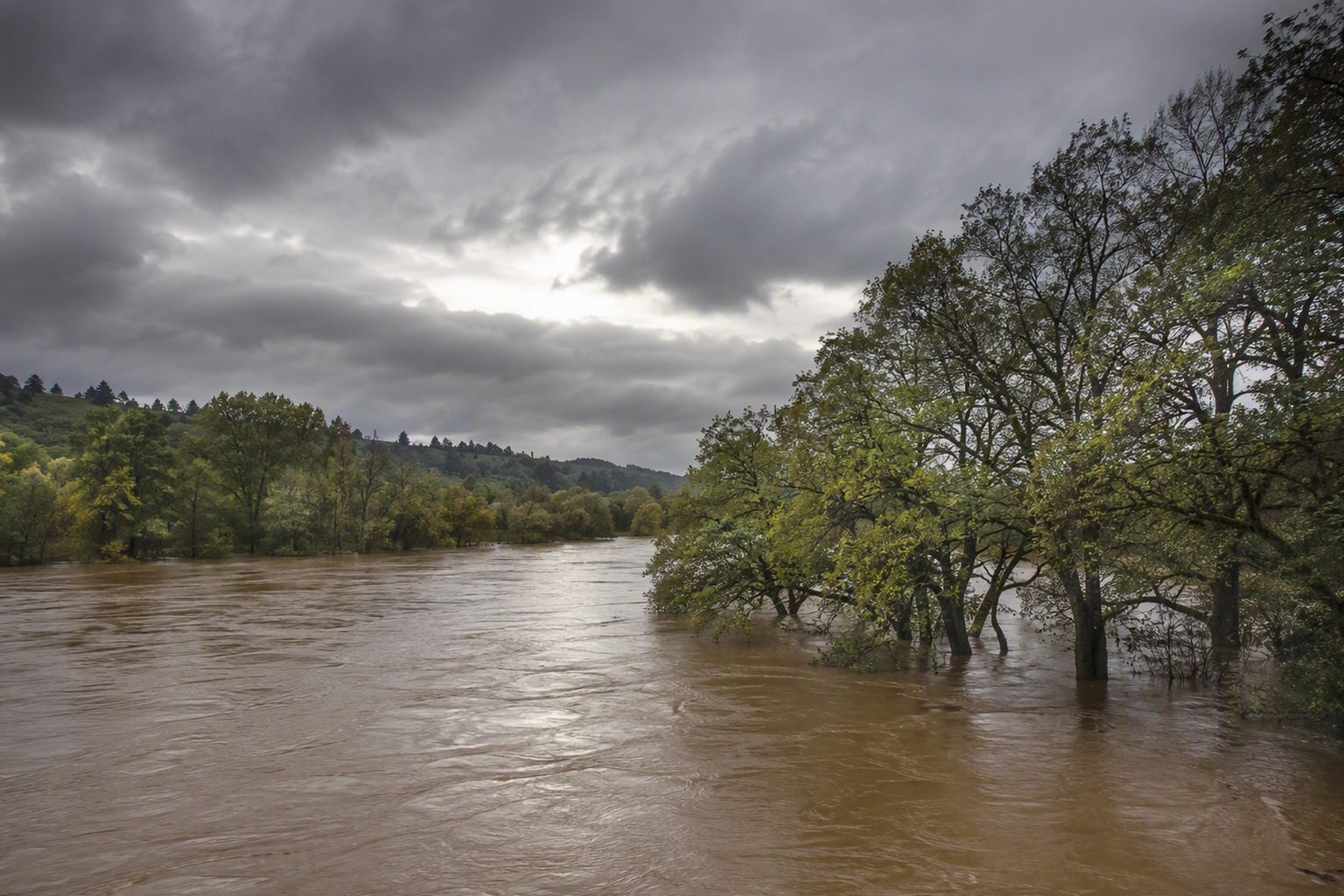
The river keeps a long memory
Salem exists because of the Willamette, and the Willamette collects rent. The ’96 flood is still the yardstick — water into neighborhoods from West Salem down through Independence, roads cut for days — and every wet winter since has been a smaller rehearsal. The pattern is always the same: a week of stacked Pacific storms saturates the valley floor, the tributaries rise first, and then the main stem comes up and stays up. The river doesn’t need to reach your door to reach your house — a week of high water raises the water table under everything within a mile of it.
What high water means for your house
Crawlspaces go first: ground moisture rises through the soil, and a torn or missing vapor barrier turns the space under your floors into a pond you can’t see. Basements follow, through the floor-wall joint and any crack the hydrostatic pressure can find. Even homes that stay dry inside spend the week humid — ductwork in a wet crawlspace carries that damp to every register.
The prep that matters is unglamorous: a working sump pump tested before the season, a vapor barrier that actually covers the ground, gutters and downspouts moving roof water away from the foundation, and grading that sheds instead of collects. If the water wins anyway, the response is the same as any flood — extraction, sanitation, measured drying — and the line is answered around the clock, whether the river is in the news or not.
Dealing with water damage right now?
A person answers 24/7 — describe what you see and dispatch starts on the call.