
Copper ages on a schedule, not a timer
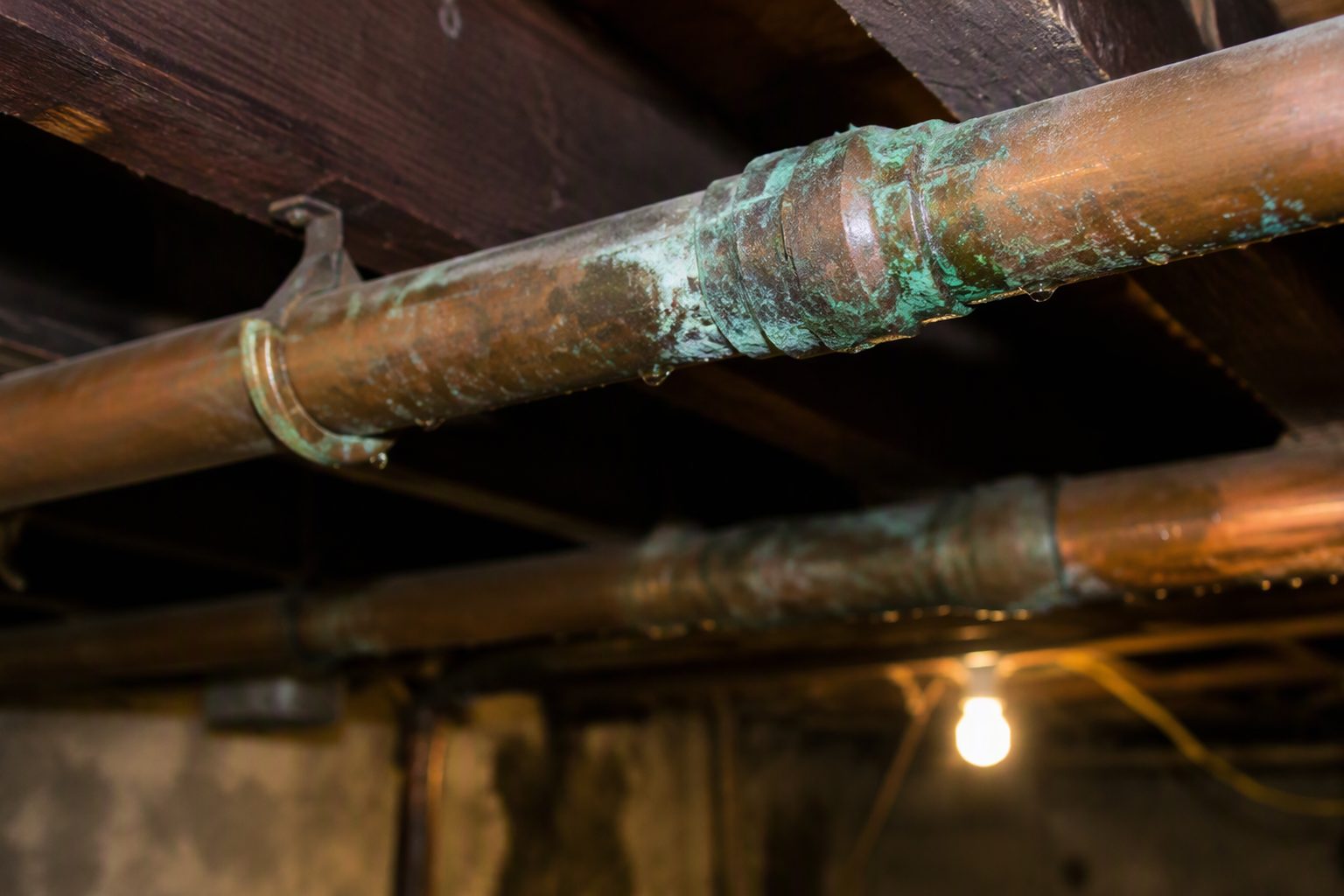
Salem’s water is moderately soft, which is kind to fixtures — but the valley’s older homes run copper that’s been working since the Eisenhower administration, and copper fails by chemistry, not by age alone. The green crust at a fitting (that’s verdigris) means water has been escaping in microscopic amounts for months. Pinhole leaks pit the pipe from the inside, and by the time one shows, the whole run is thinned. Galvanized steel, in the oldest near-downtown stock, fails worse: it corrodes inward, choking pressure until the wall gives out.
The crawlspace is where the truth lives. Nobody looks at their pipes until there’s a stain on the ceiling, and by then a fifty-dollar fitting has become a dried-out family room. Once a year — pick a dry August weekend — take a flashlight down there and read the elbows and joints like a report card.
The five signs worth acting on
One: green or white crust at joints and elbows — active corrosion weeping. Two: water pressure dropping house-wide over months — galvanized lines choking. Three: rust-brown water for the first seconds after a tap opens — corrosion inside the pipe. Four: damp or stained spots on ceilings below bathrooms — the leak you can’t see yet. Five: the sound of water when nothing is running — the meter test. Turn every fixture off and watch the meter’s leak indicator; if it creeps, water is moving somewhere it shouldn’t.
Any one of these earns a look from someone with a moisture meter. A corroded line replaced on your schedule is plumbing maintenance; the same line failing at 2 a.m. in January is a water damage job — and we’ve dried enough of both to know which one homeowners prefer.
Dealing with water damage right now?
A person answers 24/7 — describe what you see and dispatch starts on the call.