
The stain is day-old news
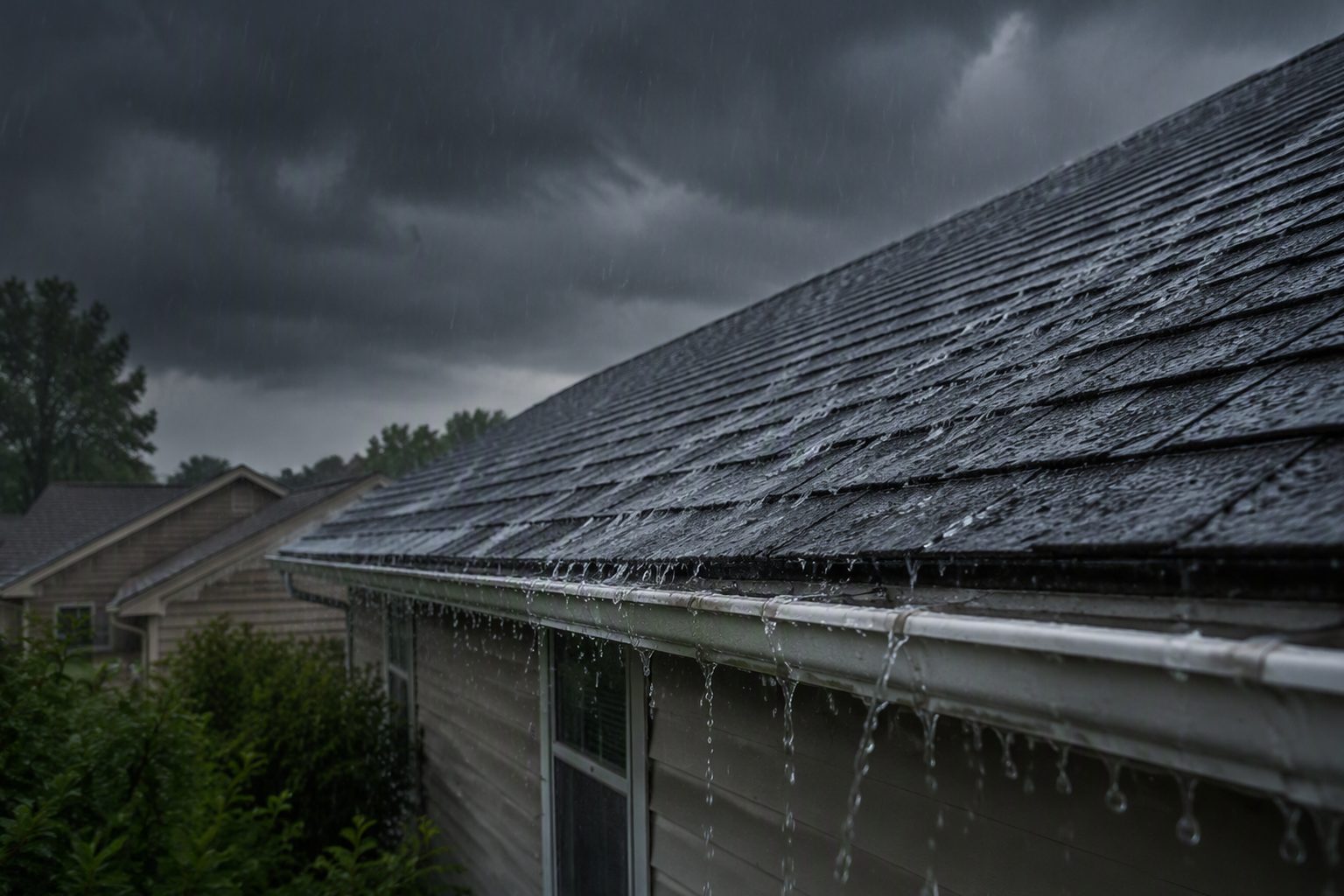
West Oregon storms come in sideways. From November through March, Pacific fronts stack up off the coast, the wind runs up the valley, and rain arrives at an angle that probes every failed flashing, lifted shingle, and tired window seal on the west and south faces of a house. The water that shows as a ceiling stain today entered yesterday — it ran down the deck, along a rafter, and across the drywall seam before it found your hallway. The visible stain is the end of a journey, and the insulation above it is soaked.
That’s why “it stopped dripping” means nothing. Storm water keeps working in the dark: insulation holds it like a sponge, drywall wicks it sideways, and the framing starts the slow clock toward mold. A moisture meter finds the whole footprint in minutes; eyes alone find the ten percent that stained.
The after-storm walkthrough
After every big blow, run the same five-minute circuit. Ceilings upstairs first — new stains, bubbling paint, a seam line that’s suddenly visible. Then the attic with a flashlight: darkened sheathing, damp insulation, a drip trail on a rafter. Outside from the ground: shingles in the yard, a gutter hanging wrong, flashing lifted at the chimney. Windows on the windward side: water at the sill or track. Finally the crawlspace hatch: storm water that didn’t come through the roof sometimes came up from the ground instead.
Photograph anything you find before touching it — your insurer will want the timeline, and day-one photos make claims simple. Then get the wet mapped and drying started. The roof repair can be scheduled; the soaked insulation cannot wait for it.
Dealing with water damage right now?
A person answers 24/7 — describe what you see and dispatch starts on the call.